Key points at a glance
- Every drink needs a fixed recipe with quantities in cl, glass, ice and garnish. Only then can you calculate the cost of goods at all.
- Pour cost is the share of the cost of goods in the net selling price. Always calculate without VAT, which is added at the very end.
- Percentages alone are not enough: also look at the gross profit in euros, especially for premium spirits and signature drinks.
- Alcohol-free drinks are both a duty and an opportunity: the law requires affordable soft drinks, and good zero-proof cocktails bring extra revenue.
- A short, clearly structured menu with quantities, allergens and gross prices sells better than a long list and avoids arguments at the till.
This post is general information and does not replace legal or tax advice. Rules change and some differ between federal states: check the details with your chamber of commerce (WKO) or IHK, the competent authority or your tax adviser.
Building the drinks menu: short, clear, selling
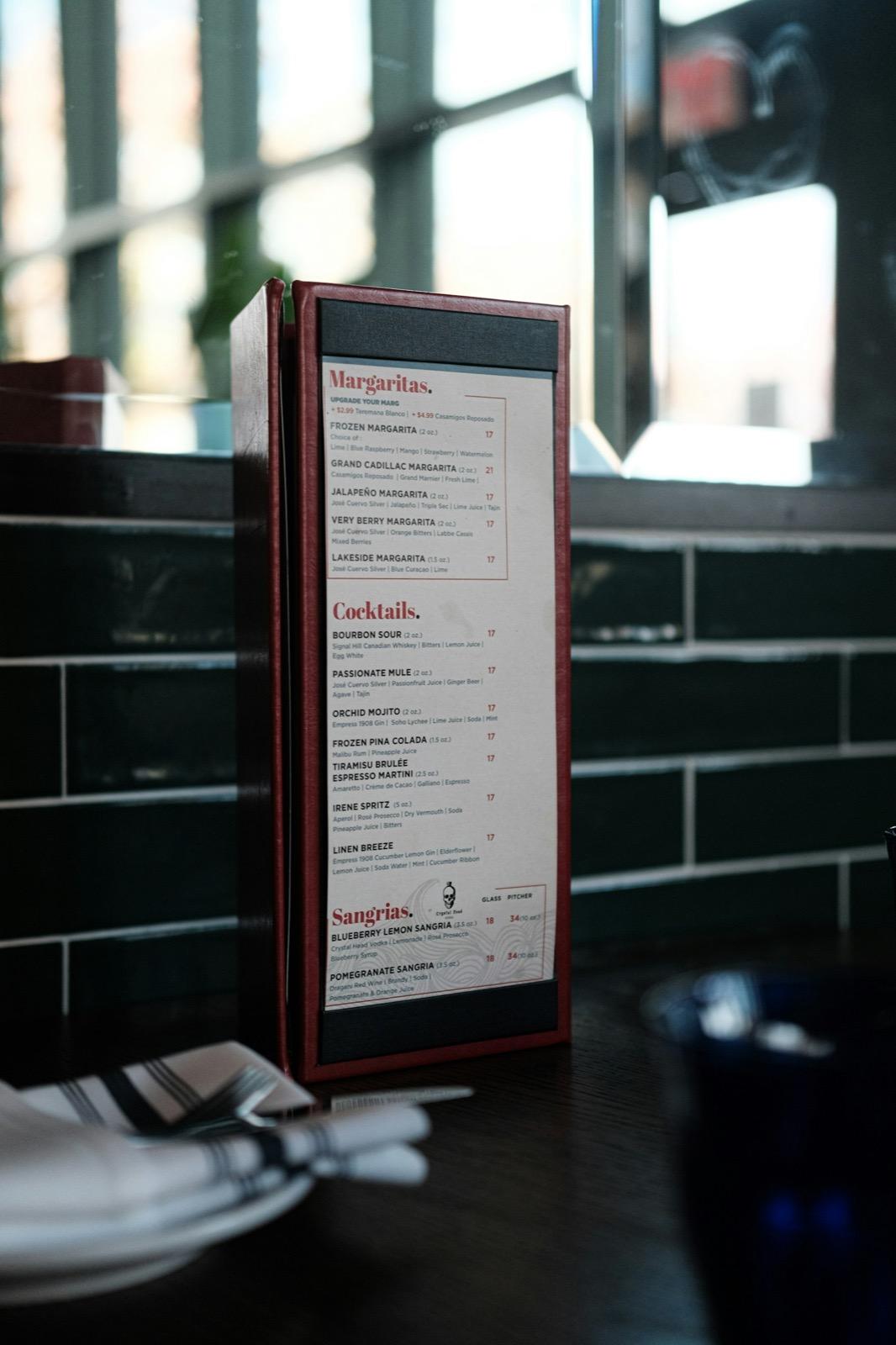
A good drinks menu is not a stock list. It shows what your bar stands for, leads guests quickly to a decision and draws the eye to the drinks that earn you good money. Guests rarely read a menu from start to finish: they skim it, stop at headings and highlighted drinks and often order whatever catches their eye first.
- Few categories: for example signature drinks, classics, highballs, beer, wine and sparkling, spirits, alcohol-free. More than seven or eight sections overwhelm guests.
- The most important first: your signature drinks belong at the start or on the right-hand page, where the eye lands first.
- Short descriptions: three to five ingredients and one flavour word (“fruity”, “bitter”, “smoky”) help more than long stories.
- A quantity for every drink: 4 cl, 0.1 l, 0.3 l, 0.5 l, in Austria also the Achtel (0.125 l). Guests can compare prices, and price display rules require clear information.
- No price column on the right edge that invites comparison: the price works better right after the description.
- Less is more: every bottle on the menu ties up money in stock. Whatever hardly sells goes at the next revision.
If you offer a larger wine selection, you will find tips on wine by the glass, bottle choice and costing in the guide to the wine list.
Standardising recipes
No fixed recipe, no costing. If everyone behind the bar pours by feel, the cost per drink varies widely and guests get two different drinks on two evenings. A recipe card for every drink keeps quality consistent, makes training new staff easier and is the basis for your stocktake.
Set ingredients and quantities
Every ingredient in cl or pieces, including syrup, juice, bitters (in dashes) and mixers. Measure with a jigger, not by eye.
Define glass, ice and garnish
Glass type, ice (cubes, crushed, a large block) and garnish belong in the recipe, as they affect volume, look and cost.
Describe the method
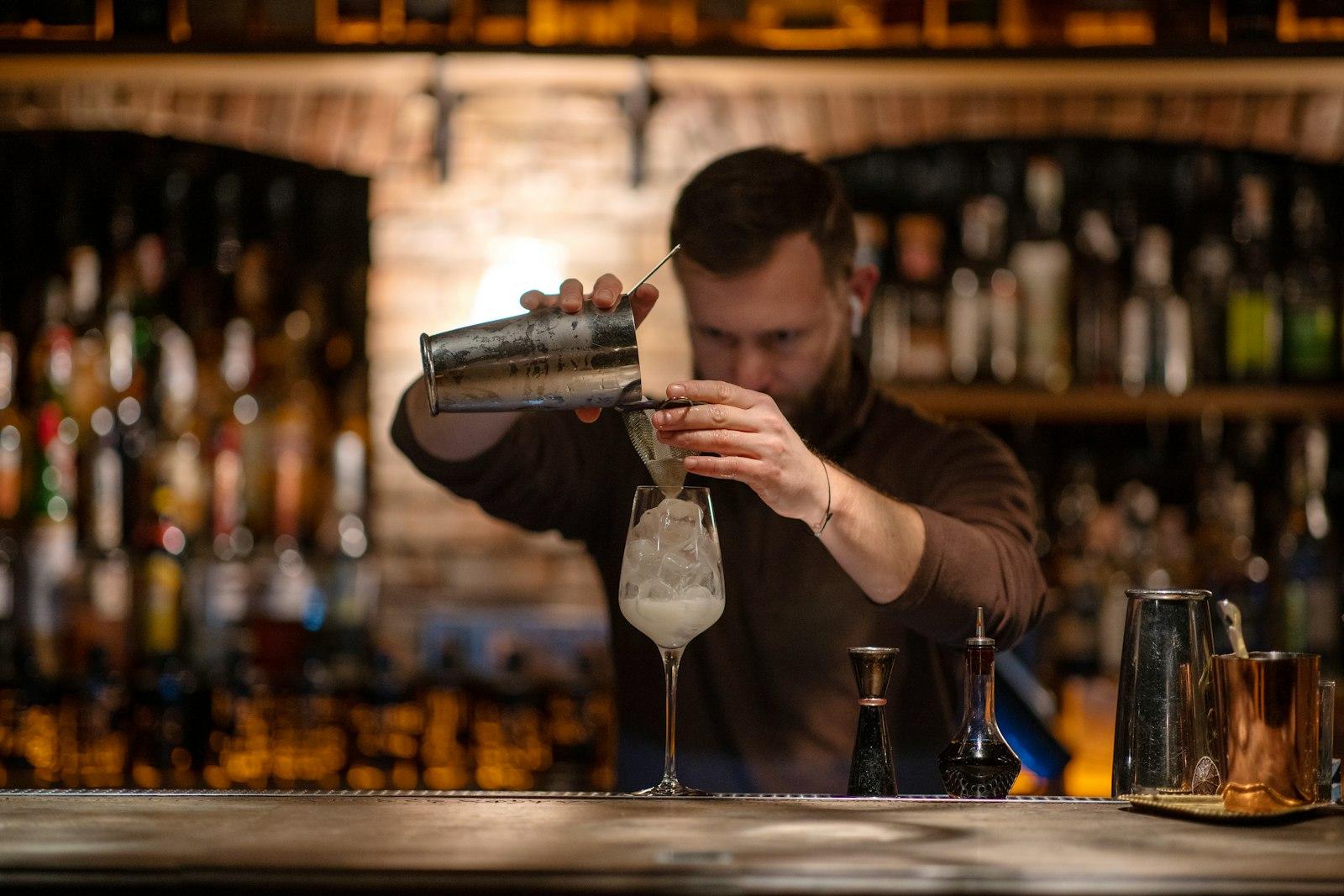
Shaken, stirred or built, order of ingredients, timing. A photo of the finished drink helps the team with presentation.
Enter purchase prices
Net purchase price per bottle or pack and from that the price per cl or piece. Update it as soon as a supplier changes prices.
Test and train as a team
Everyone on the team mixes the drink from the card. Differences in taste or volume are discussed until everyone works the same way.
Calculating pour cost: the cost of goods per drink
Pour cost is a drink's cost-of-goods ratio: the net cost of goods divided by the net selling price. A drink that costs you €2.50 in ingredients and sells for €10 net has a pour cost of 25 percent. The other way round, the price is the cost of goods divided by the target pour cost, plus VAT. For drinks that is generally 20 percent in Austria and 19 percent in Germany.
This is how you calculate the cost of goods: the net bottle price divided by its content in cl gives the price per cl. A 0.7 litre bottle of gin at €21 net costs €0.30 per cl, so 4 cl cost €1.20. Add mixers, juices, syrup, garnish and ice. The table below shows examples with freely assumed purchase prices; plug in your own. The free drinks price calculator for bars works out the price per cl and per glass from bottle price, pour size and target percentage automatically.
| Drink | Net cost of goods | Target pour cost | Net price | Gross AT (20%) | Gross DE (19%) |
|---|---|---|---|---|---|
| Gin and tonic (4 cl gin, 0.2 l tonic, lime, ice) | €2.35 | 25% | €9.40 | €11.28 | €11.19 |
| Spritz (6 cl bitter liqueur, 9 cl prosecco, soda, orange) | €2.12 | 25% | €8.48 | €10.18 | €10.09 |
| Signature drink (5 cl rum, house syrup, lime, garnish) | €3.00 | 22% | €13.64 | €16.37 | €16.23 |
| Alcohol-free signature drink (syrup, juice, tonic) | €2.10 | 25% | €8.40 | €10.08 | €10.00 |
| Draught beer 0.5 l (50 l keg at €120 net) | €1.20 | 25% | €4.80 | €5.76 | €5.71 |
Which pour cost is right depends on your concept, rent, staff and price level. There is no universal number; many bars cost spirits and cocktails at a lower ratio than beer or wine because more work goes into the glass. What matters is that you set your targets deliberately and compare them regularly with the real figures. Wastage from spills, free drinks or wrong bookings raises your actual cost of goods; how to measure it is explained in the guide to stocktaking and shrinkage in the bar. The basic principle of costing is also covered in the guide costing your dishes properly.
Work out the selling price in seconds
Enter cost of goods and target ratio, choose VAT for Austria or Germany: the price calculator shows the gross price for your menu.
Setting prices: costing, market and perception
The calculated price is the starting point, not the end. Three more questions decide what finally goes on the menu: what do comparable bars in your area charge? What gross profit in euros does the drink bring? And how does the price look on the menu next to the others?
- Gross profit in euros: a premium whisky with a 35 percent pour cost can earn more euros per glass than a highball at 20 percent. Rigid percentages often make expensive products unsellably expensive.
- Market check: look at the menus of three to five competitors, online too. You do not have to be the cheapest, but your price should match the experience.
- Round, credible prices: round up to sensible price points, such as whole or half euros. That also makes taking payment easier.
- Price anchor: a deliberately high-priced drink on the menu makes the drinks next to it look fairer.
- Check regularly: purchase prices change. Review your costing at least once a year and after every major supplier price increase.
The menu must always show gross prices including VAT and all surcharges. Happy hour prices and promotions must be clearly recognisable, with their time frame. The exact rules for the price display and the menu are in the guides to price display in Austria and Germany.
How to get it right
- Cost every drink individually, including garnish and ice
- Look at pour cost and gross profit together
- Recalculate prices right after supplier increases
- State quantities on the menu so prices are comparable
Better not
- Simply copy prices from the bar next door
- Calculate with gross prices and forget the tax
- Use the same markup for every drink
- Flat-rate or cheap promotions that encourage binge drinking
Developing signature drinks
Signature drinks are only available at your place. They make the bar distinctive, end up in photos on social media and are harder to compare with other bars. For them to work financially too, they should fit the concept, the stock and the pace behind the bar.
Checklist for a new signature drink
- Does the drink fit the bar's concept and target group?
- Does it use ingredients already in stock, rather than new bottles for a single drink?
- Can it be made in under two minutes, even on a busy night?
- Is the recipe documented and the pour cost calculated?
- Does it have a memorable name and a short, appetising description?
- Are the allergens of the ingredients recorded, such as egg, milk or nuts?
- Is there a good photo for the menu, website and Instagram?
Homemade syrups, infusions and cordials are often cheaper than ready-made products and make the flavour unique. But count the working time and test the shelf life. Four to six signature drinks are enough for most bars; one or two seasonal drinks keep the menu lively without having to reprint it all the time.
Alcohol-free drinks: duty and opportunity
If you serve alcohol, you must also offer affordable alcohol-free drinks. In Austria, § 112 (4) of the Gewerbeordnung (Trade Act) requires you to serve cold non-alcoholic drinks on request, with at least two of them no more expensive than the cheapest cold alcoholic drink, calculated per litre and specially marked on the menu. In Germany, § 6 of the Gaststättengesetz (Restaurant Act) requires at least one alcohol-free drink to be no more expensive than the cheapest alcoholic one, also calculated per litre. Some federal states have their own restaurant laws; if in doubt, ask your IHK (chamber of commerce) or the municipality.
Beyond that, alcohol-free drinks are a growing business: drivers, pregnant guests, people who deliberately drink less or simply want a change between two cocktails. A carelessly mixed orange juice with soda wastes this opportunity. Zero-proof cocktails with homemade syrup, tea, spices or alcohol-free distillates can be costed much like classic cocktails and bring a good gross profit. Trend data, mocktail costing, prices and menu placement are covered in depth in the guide to the alcohol-free drinks menu with mocktails and low-ABV drinks.
| Offer | What for | Tip |
|---|---|---|
| Affordable mandatory drinks | Legal requirement in AT and DE | Mark them clearly on the menu and compare per litre |
| Alcohol-free classics | Guests who want something familiar | Alcohol-free beer, spritz or gin and tonic with an alcohol-free distillate |
| Zero-proof signature drinks | An experience without alcohol | Own section, same glasses and garnish as cocktails |
| Homemade lemonades | Daytime, families, outdoor seating | Low cost of goods, easy to prepare |
Youth protection, allergens and mandatory information
The drinks menu is also a place for mandatory information. On youth protection, in simple terms: in Austria no alcohol may be served to young people under 16, and between 16 and 18 no spirits, not even in mixed drinks or cocktails; the details are set by the youth protection laws of the federal states. In Germany, § 9 of the Jugendschutzgesetz (Youth Protection Act) prohibits serving spirits and drinks containing spirits to anyone under 18 and, as a rule, other alcoholic drinks such as beer, wine or sparkling wine to anyone under 16.
- Cocktails with spirits are off limits for under-18s, even if they seem fruity and harmless. A short note on the menu and at the bar supports your team.
- ID checks: train your team to ask for ID when in doubt. In Germany, the Youth Protection Act must also be displayed where it is clearly visible.
- Allergens: drinks contain allergens too, such as sulphites in wine, gluten in beer, milk in cream cocktails, egg in a sour with egg white or nuts in almond syrup and liqueurs. The information must be available to guests, on the menu or on request backed by written documentation.
- Quantities and prices: every drink with quantity and gross price, serving glasses with a fill line where required.
You can create a clear legend of the 14 main allergens for your menu with the allergen generator. How the labelling must look in detail is explained in the guides to allergens in Austria and Germany.
The drinks menu online and at the table
Many guests look at the menu before they choose a bar. A drinks menu as text on your website, with categories, descriptions, quantities and prices, is found by Google and can be updated in a few minutes whenever prices change. A PDF or a photo of the printed menu, by contrast, is hard to read on a phone and quickly out of date. How to set it up is shown in the guide to the digital menu.
Put the menu online as text
All drinks with description, quantity, price and allergens on the website, easy to read on a phone.
QR code on the table
A table stand with a QR code leads straight to the current menu, handy for guests from abroad too. You can create a QR code for your drinks menu with a printable table stand for free.
Keep the printed menu
For many guests a beautiful menu is part of the bar experience. Online and printed versions must show the same prices.
Photos of the signature drinks
Good pictures on your website, Google profile and Instagram make people want to visit.
Your bar website with drinks menu
See in a free preview how your bar looks online with drinks menu, events and reservations.
A free preview of your venue website, designed by us.