
Key points at a glance
- Every hospitality business starts with the trade registration under § 14 GewO (Gewerbeordnung, the Trade Regulation Act); whether you also need a Gaststättenerlaubnis (restaurant licence) or just a notice depends on your federal state.
- If you serve alcohol in a state that still applies the federal Gaststättengesetz, you need a licence under § 2 GastG and usually the IHK Unterrichtungsnachweis (certificate of attendance from the Chamber of Commerce).
- Everyone who works with food needs the briefing under § 43 IfSG (Infektionsschutzgesetz, the Infection Protection Act); the certificate may be no more than three months old when work starts.
- Electronic tills need a TSE (certified technical security device) and must be reported to the tax office within one month; the Fragebogen zur steuerlichen Erfassung (tax registration questionnaire) also goes to the tax office within one month.
- Allow three to six months of lead time and go online with your website and Google profile before the doors open.
This post is general information and does not replace legal or tax advice. Rules change and some differ between federal states: check the details with your chamber of commerce (WKO) or IHK, the competent authority or your tax adviser.
Concept and location: the basis for every application
Before you fill in a single form, be clear about what you are opening: a restaurant with a full bar, a café without alcohol, a bar, an Imbiss (snack bar) or a guesthouse with breakfast. That decides which permits you need, how the premises must be equipped and which costs come your way. We have separate guides for individual business types: opening a café, opening a bar, Imbiss and food truck and guesthouse and hotel.
- Type of business: food, drinks, alcohol or not, outdoor seating, music or events.
- Location: passing trade, parking, neighbours (noise), whether the use is permitted under the local development plan (Bebauungsplan).
- Premises: Was there already a restaurant here? Then the permitted use under building law often fits already. If not, you may face a change of use.
- Financing: investment in kitchen, ventilation, furniture and till, plus start-up losses in the first months. The break-even calculator for restaurants shows how many guests a day you need to cover rent, staff and loan repayments. Ask the IHK, the employment agency (Arbeitsagentur) and the state development banks about start-up grants and subsidised loans.
Trade registration and hospitality law: licence or notice?
Your first trip to the authorities is the trade registration (Gewerbeanzeige) under § 14 of the Gewerbeordnung at your municipality's trade office (Gewerbeamt). It is mandatory for anyone starting a fixed-location business, is due at the latest when operations begin and costs a modest fee that varies by municipality. The trade office passes the data on to other bodies, including the tax office and the IHK (§ 14 (8) GewO).
Hospitality law is more complicated. The federal Gaststättengesetz (GastG), the Restaurant Act, only still applies in states that have not passed their own law. There you need a licence under § 2 GastG as soon as you serve alcohol. Under § 2 (2) GastG, no licence is needed for, among other things, serving non-alcoholic drinks, selling prepared food and catering for overnight guests. Many states have replaced the licence with a notice (Anzeige), where the authority checks your reliability if you want to offer alcohol. All the details are in our guide to the Gaststättenerlaubnis in Germany.
| Model | Federal states | What it means for you |
|---|---|---|
| Federal Gaststättengesetz | Bavaria, Berlin, Hamburg, Mecklenburg-Western Pomerania, North Rhine-Westphalia, Rhineland-Palatinate, Schleswig-Holstein | Licence under § 2 GastG for serving alcohol, IHK Unterrichtungsnachweis under § 4 (1) no. 4 GastG |
| State law with licence | Bremen (BremGastG) | Licence for serving alcohol, with reliability check |
| State law with notice | Brandenburg, Hesse, Lower Saxony, Saarland, Saxony, Saxony-Anhalt, Thuringia | Notice before opening (often four weeks in advance), reliability check for alcohol, no mandatory IHK briefing |
| New state law with notice | Baden-Württemberg (LGastG since 1 January 2026) | Notice at least six weeks before opening, Unterrichtungsnachweis submitted with the notice |
Hygiene: IfSG briefing, food inspection and HACCP
Anyone who commercially produces, handles or sells food needs a certificate under § 43 of the Infektionsschutzgesetz before their first shift. It is issued by the health office (Gesundheitsamt) or an authorised doctor after a briefing and may be no more than three months old when the work starts. As an employer, you must then brief your team again every two years, document this and keep the records on site (§ 43 (4) and (5) IfSG).
EU food hygiene law applies as well: you must set up a self-monitoring system based on HACCP principles, which means defining, monitoring and documenting critical points such as cooling temperatures, cooking and cleaning. The food inspection authority (Lebensmittelüberwachung) of your district or city checks this, often soon after opening. Allergen labelling is part of it from day one, too.
Hygiene before the first guest
- IfSG certificate for yourself and every employee who handles food
- HACCP plan with temperature, cleaning and goods-in logs
- Food hygiene training for staff documented
- Allergen information prepared for every dish and drink
- Appointment or contact with the food inspection authority before opening
Building authority, change of use and premises
Under building law, a shop unit is not yet a restaurant. If a shop, office or workshop is turned into a venue, you usually need a building permit for the change of use (Nutzungsänderung) under the state building code (Landesbauordnung). The building authority then checks parking spaces, fire safety, escape routes, toilets, ventilation and noise protection. For venues serving alcohol in states with the federal GastG, the licensing authority also checks whether the premises are suitable (§ 4 (1) no. 2 GastG) and, for certain newer buildings, accessibility (no. 2a).
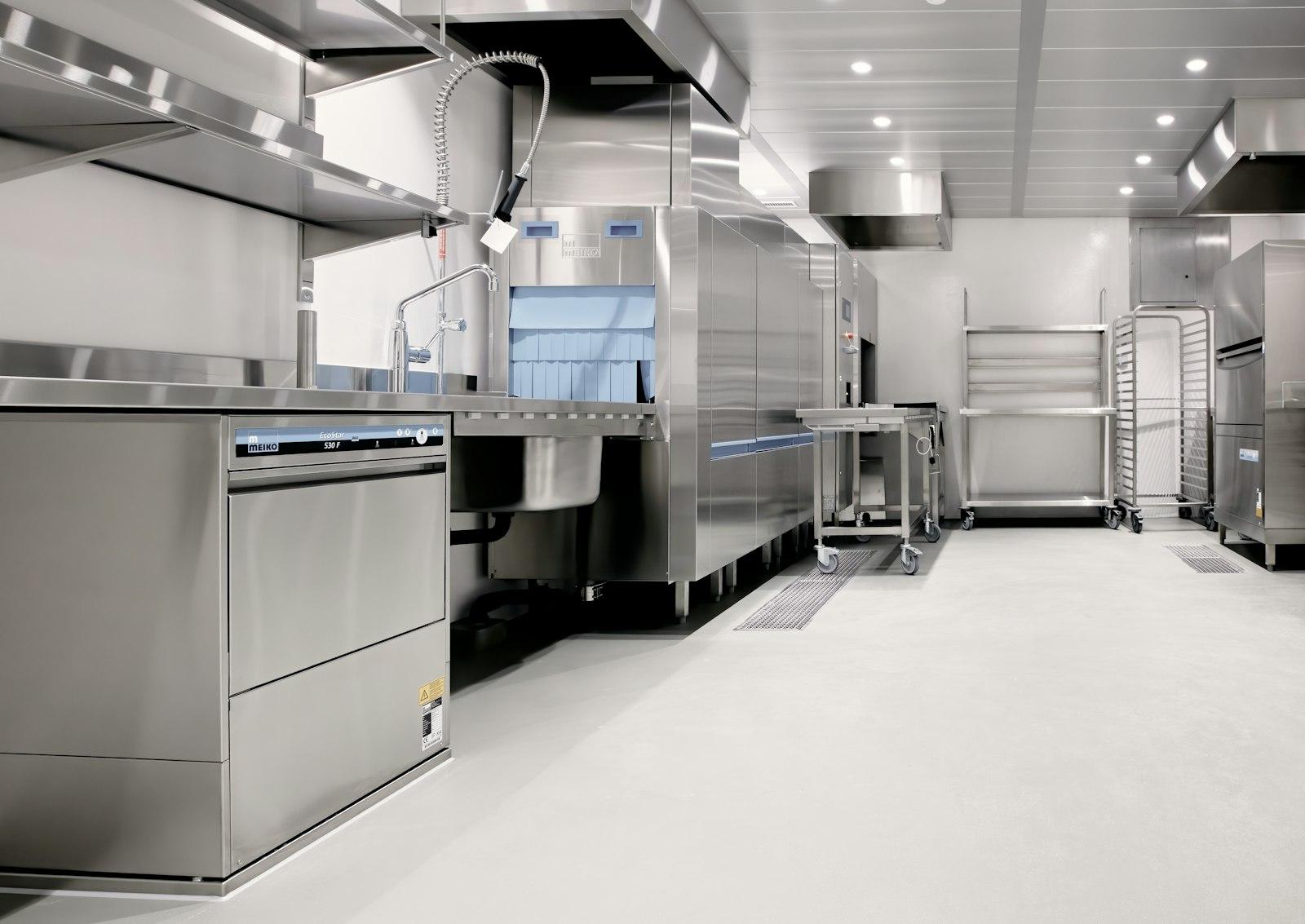
Allow time for the building permit: depending on the authority and the scope, it takes from a few weeks to several months. An architect with hospitality experience knows the requirements for kitchen extraction, grease separators and sanitary facilities and saves you costly rework.
Tax office and till system with TSE
After your trade registration, the tax office will not automatically get in touch with everything you need. You must submit the Fragebogen zur steuerlichen Erfassung electronically via ELSTER, the tax authorities' online portal, within one month of opening (§ 138 AO, the Fiscal Code). It covers your legal form, expected turnover, VAT and your tax number.
Germany does not yet have a general obligation to use a cash register; an open cash box is allowed. As soon as you use an electronic till system, however, it must be protected by a certified technical security device (TSE) under § 146a AO. You must issue receipts and report the till to the tax office via ELSTER within one month of purchase. More on this in the guide to till systems in Germany.
Staff, insurance and GEMA
Since 1 January 2026, the statutory minimum wage has been 13.90 euros gross per hour; an increase to 14.60 euros has been agreed for 2027. The earnings limit for minijobs is 603 euros a month in 2026. As an employer, you register employees with their health insurance fund or the Minijob-Zentrale and, for minijobs, record working hours.
- Berufsgenossenschaft: hospitality businesses are compulsory members of the BGN, the statutory accident insurer for the food and hospitality sector. Notification to the accident insurer is due within one week (§ 192 SGB VII); a trade registration filed on time counts as fulfilling this.
- Insurance: public liability, contents and business interruption insurance are not required by law, but restaurant owners can hardly do without them. Leases often require them.
- Music: if you play music in your venue, even just in the background, you need a licence from GEMA, the German music rights society. Register the use before you start.
- Broadcasting fee (Rundfunkbeitrag): business premises are liable to pay; the amount depends on the number of employees.

Website and Google profile before opening
Most guests look up a new venue on their smartphone first. If you already have a website with menu, opening hours and directions on opening day, plus a verified Google Business Profile, you start with guests instead of empty tables. Create the profile as soon as the address is fixed, and add photos as soon as the interior is ready.
How to get it right
- Put your website with menu, opening hours and opening date online four to six weeks in advance
- Include a complete legal notice and a privacy policy
- Keep your Google profile up to date with category, photos and opening date
- Offer reservations or pre-orders directly on your own site
Better not
- Rely on an Instagram page without a website of your own
- Wait until after opening to add your hours on Google
- Show different prices on the website and the menu
- Present stock photos as your own food
Your restaurant website before opening day
See in a free preview how your venue could look online: with menu, opening hours and reservations, at a fixed price of €1,800.
A free preview of your venue website, designed by us.
Timeline: seven steps to opening day
6 months before: concept and location
Business plan, financing, search for premises. Check with the building authority and the trade office in advance whether your concept is permitted there.
5 months before: lease and building application
Sign the lease with a termination clause, submit the building application for change of use or conversion.
3 months before: gather documents
Book the IHK briefing (where required), apply for a certificate of good conduct (Führungszeugnis) and an extract from the central trade register (Gewerbezentralregister), choose a till system with TSE.
6 to 4 weeks before: register and notify
Trade registration, apply for the Gaststättenerlaubnis or file the notice, put website and Google profile online, register for a GEMA licence.
4 weeks before: staff
Hire employees, organise IfSG briefings, register with the health insurance fund or Minijob-Zentrale, train staff on hygiene and allergens.
Opening week: trial run
Soft opening with friends and neighbours, test your processes, report the till to the tax office (within one month of purchase).
First month: taxes and reviews
Submit the tax registration questionnaire, ask guests for reviews, add real photos to your website and Google profile.
What does your website cost?
Compare an agency, a website builder and a fixed-price package for your venue in the cost calculator.